
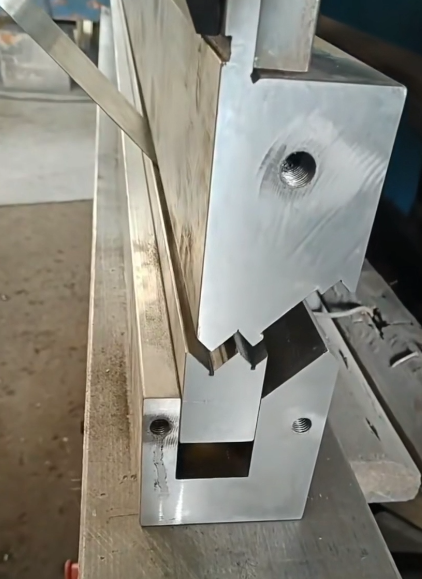
Why Door Panels Need Custom Press Brake ToolingHow to Reduce Four-Side Bending Errors
How Custom Press Brake Tooling Improves Door Panel Forming Efficiency: Technical Parameters, Applications, and Selection Guide
Fire doors, entrance doors, appliance panels, and electrical cabinet doors all share several characteristics: all four sides need to be bent, the edges often require hemming or wrapping, and production volumes are usually high.
When standard V dies are used to bend each side separately, the four edges require four separate operations. Each operation requires repositioning the workpiece, resulting in low efficiency and inconsistent bending angles.
This guide explains the technical parameters, applications, and selection methods of custom press brake tooling, door panel forming dies, and single-stroke press brake tooling to improve the forming accuracy and production efficiency of metal door panels and door edges.
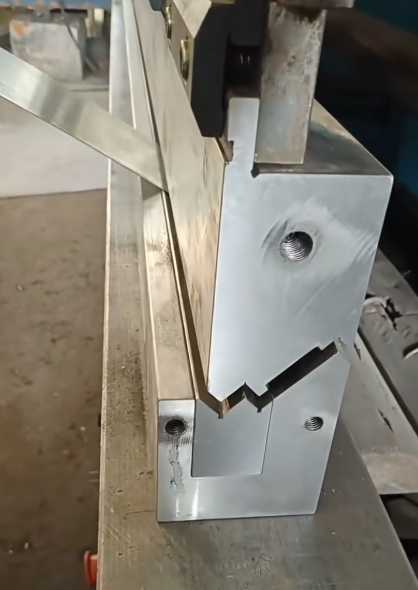
Why Do Door Panels Need Custom Press Brake Tooling?
In the production of metal doors, fire doors, industrial doors, and elevator door panels, the workpieces often feature long bending edges, narrow return flanges, reinforcement ribs, and multiple compound angles.
Using standard press brake tooling may lead to the following problems:
- Insufficient straightness along the length of the door panel;
- Large bending angle deviations;
- Accumulated errors caused by repeated positioning;
- Local deformation or tooling marks on the door edge;
- Long changeover times and unstable production efficiency.
Custom press brake tooling can be designed according to the door panel structure, material thickness, bending length, and press brake tonnage. This allows the tooling working areas to match the product profile and improves forming consistency.
First, Understand What These Three Types of Tooling Solve
1. Door Panel Forming Die
A door panel forming die is a customized upper and lower die set designed according to the complete four-side bending profile of the door panel. It can form multiple bends in one forming cycle and eliminate positioning errors caused by bending each edge separately.
Common designs include:
- Scimitar-style door frame bending tools;
- Mark-free forming sections;
- Door frame forming dies with R-angle radii.
These tools are suitable for coated or painted door panels where surface marks are not acceptable.
2. Door Edge Forming Tooling
Door edge forming tooling is designed for hemming, flanging, and edge forming operations. It forms the edge of a door panel into a specific cross-section, such as a wrapped edge, Z-shaped edge, or hinge edge.
These tools are commonly used together with door edge forming machines or press brakes. The forming angle, R radius, and springback compensation should be designed according to the actual measured door edge profile.
3. Single-Stroke Press Brake Tooling
Single-stroke press brake tooling is a type of compound die. During one downward stroke of the press brake ram, it can complete two or more forming operations at the same time.
For example:
- A Z-step die can form two angles in one stroke;
- A compound die can complete stepped bending, double bending, and preliminary hemming;
- A combined forming tool can complete multiple door edge operations in one cycle.
With a mature tooling design, single-stroke forming can improve production efficiency several times compared with conventional step-by-step bending. Some similar hinge forming solutions have achieved production increases of more than 900%.
Key Technical Parameters of Door Panel Forming Dies
1. Material Thickness and Die Opening
Common door panel materials include cold-rolled steel, stainless steel, and galvanized steel. The lower die opening should be selected according to the material thickness and tensile strength.
| Sheet Thickness | Recommended V-Die Opening | Typical Application |
|---|---|---|
| 0.8–1.2 mm | 8–12 mm | Thin door panels and decorative panels |
| 1.5–2.0 mm | 12–16 mm | Standard steel doors and fire doors |
| 2.5–3.0 mm | 20–24 mm | Reinforced door panels and industrial doors |
For air bending, the V-die opening can initially be estimated at approximately 6–8 times the sheet thickness. The final opening should be verified according to the material yield strength, bending radius, and press brake capacity.
2. Bending Length and Required Force
The effective tooling length should cover the actual bending area of the product. Long door panels may require segmented tooling, full-length tooling, or specialized tooling with crowning compensation.
The required bending force can be initially estimated using the following formula:
Where:
- F: bending force in kN;
- σᵦ: material tensile strength in N/mm²;
- L: bending length in mm;
- t: sheet thickness in mm;
- V: lower die opening in mm.
For example, when using steel with a tensile strength of approximately 450 MPa, a sheet thickness of 1.5 mm, a bending length of 2000 mm, and a V-die opening of 12 mm, the theoretical bending force is approximately 190 kN.
The actual tooling and machine selection should also consider the safety factor, machine condition, and load distribution across multiple forming areas.
3. Bending Angle and Springback Control
Common door panel forming angles include 90°, 95°, 135°, and multiple compound angles. Because steel and stainless steel experience springback, the tooling angle cannot simply be set equal to the final product angle.
Springback is affected by:
- Material tensile strength and yield strength;
- Sheet thickness;
- Internal bending radius;
- Lower die opening;
- Bending method and ram penetration depth.
Custom tooling can reduce angle deviations through angle compensation, coining sections, or localized correction areas.
For mass production, it is recommended to use trial-bent samples to measure the actual angle and include the compensation value in the final tooling design.
Four-Side Door Panel Bending: Low Efficiency and Accumulated Errors
When the four sides of a door panel are bent separately, each operation requires repositioning and realignment. Positioning errors from the four operations accumulate, causing increasing deviations in the door panel diagonals and hinge-side tolerances.
Tool changes and machine adjustments are also required when switching between different products.
Solution: One-Pass Door Panel Forming
A door panel forming die can be customized according to the external profile of the door panel. The upper and lower die combination can complete four-side bending within one ram stroke.
For door panels with high precision requirements, the forming sequence can be designed to bend the short sides first. This helps minimize accumulated positioning errors.
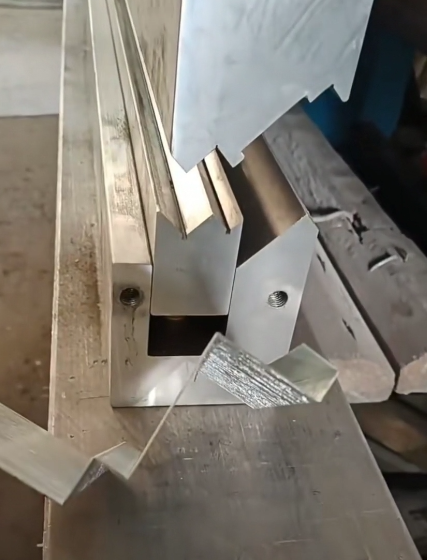
Door Edge Interference and Tooling Marks
Customized Tooling Materials and Surface Treatment
Press brake tooling is commonly manufactured from alloy tool steel, cold-work die steel, or heat-treated high-strength steel.
Typical technical requirements include:
- Tool hardness of approximately HRC 46–55;
- Precision grinding of the working areas;
- Chamfered or radiused transitions on critical forming sections;
- Nitriding or other surface treatments for high-frequency working areas;
- Anti-scratch designs for stainless steel processing.
For door panels with strict surface requirements, sharp tooling edges and concentrated pressure points should be avoided.
When necessary, rollers, polyurethane protection layers, or replaceable contact inserts can be used to reduce surface scratches.
Key Design Points for Door Edge Forming Tooling
Door edge forming tooling is mainly used for edge bending, return flanging, and hemming operations.
The door edge directly affects the assembly clearance, sealing performance, and structural strength of the finished door. Therefore, tooling accuracy also affects subsequent welding and assembly operations.
When designing door edge forming tooling, the following parameters should be considered:
- Finished edge widths, such as 20, 25, 30, or 40 mm;
- Internal bending radius based on sheet thickness and material properties;
- Door edge verticality;
- Left-right symmetry;
- Tooling positioning references;
- Clearance around reinforcement ribs and lock box areas.
If the door edge must be welded to other components, the bending angle and edge width tolerances should be controlled within the limits required by the manufacturing process.
For example, the edge width tolerance of a standard door panel may be controlled within ±0.3–0.5 mm. For products with higher assembly accuracy requirements, tighter tolerances and additional positioning features may be necessary.
Why Choose Shengpu Tooling?
The key to door panel processing is not simply increasing bending force. It is also necessary to control bending angle, straightness, edge width, and batch-to-batch consistency.
Through custom press brake tooling, door panel forming dies, and door edge forming tooling, manufacturers can:
- Reduce repeated positioning;
- Shorten production cycle times;
- Improve bending consistency;
- Reduce surface marks;
- Improve subsequent welding and assembly quality.
For products with fixed structures, high production volumes, or complex door edges, it is recommended to evaluate a single-stroke forming solution during the tooling design stage.
Customized tooling based on sheet thickness, bending length, press brake tonnage, and tolerance requirements can provide more stable production results.
Do you need a custom door panel forming die or single-stroke press brake tooling?
Please provide your product drawings, material specifications, and press brake model so that we can evaluate the tooling structure, bending force, and process feasibility.
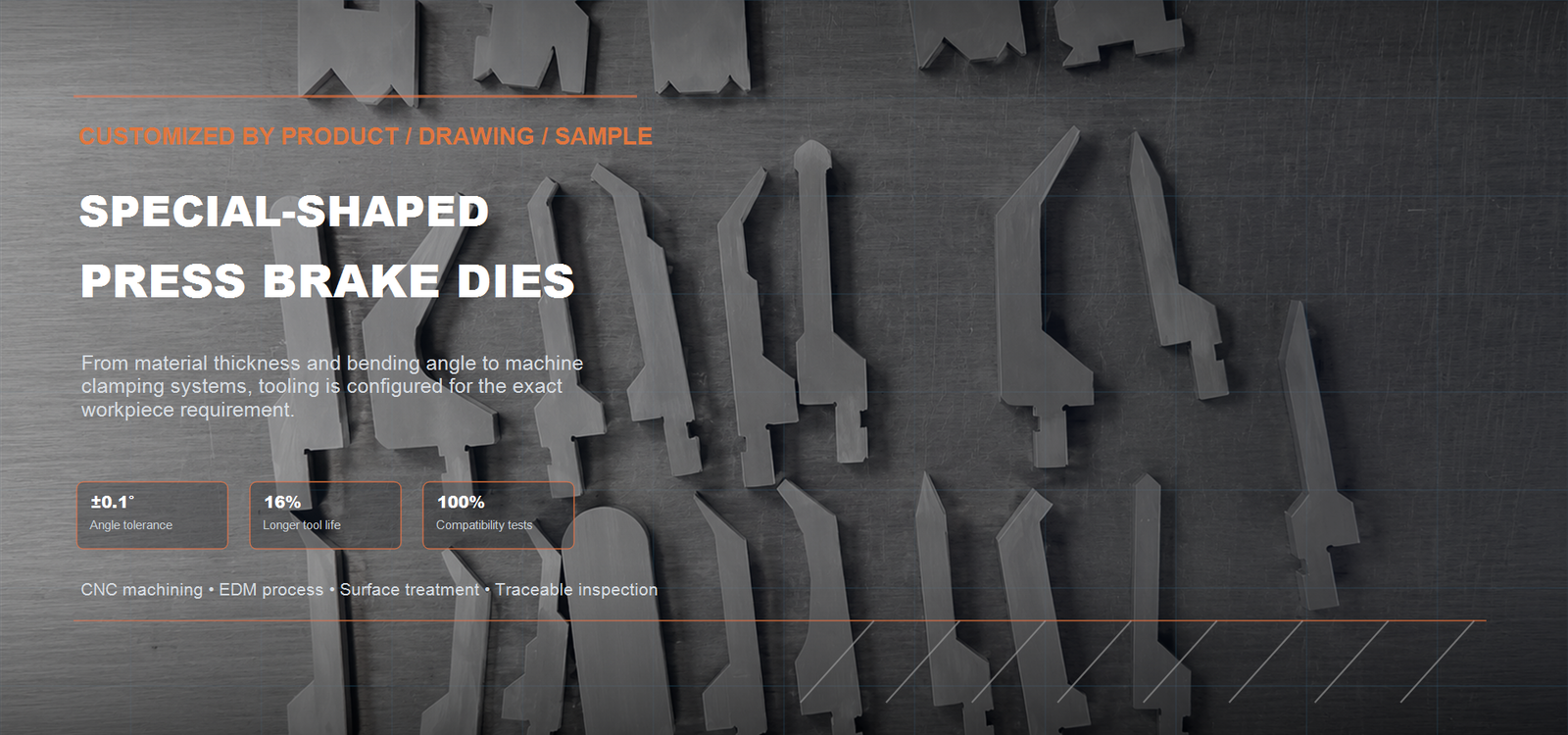
Contact Shengpu Tooling
WhatsApp Business: +86 15155556086
Email: leah@sinobend.com
Website: shengputooling.com
No responses yet