Many sheet metal manufacturers have faced this problem: the drawing looks simple, but once production starts, the bending result is not stable.
The part may require an offset bend, a stepped bend, or a Z-shaped bend within a very limited forming space. Standard press brake punches and dies may cause tool interference, unstable angles, poor repeatability, or visible marks on the workpiece.
In this situation, the problem is usually not the press brake machine. Very often, the real issue is that the tooling design is not suitable for the bending structure.
Why Offset and Z Bending Can Be Difficult
Offset bending and Z bending are commonly used when two related bending features need to be formed close to each other. The distance between the bends is often small, and the forming space is limited.
If standard tooling is used, customers may experience several problems:
Unstable bending angles.
Tooling interference during forming.
The workpiece cannot be positioned correctly.
The finished part does not match the drawing.
Repeated machine adjustment wastes time and material.
For small batch production, this may already cause delays. For mass production, the problem becomes even more serious because every unstable bend increases the risk of rework and scrap.
What Is Offset Z Bending Tooling?
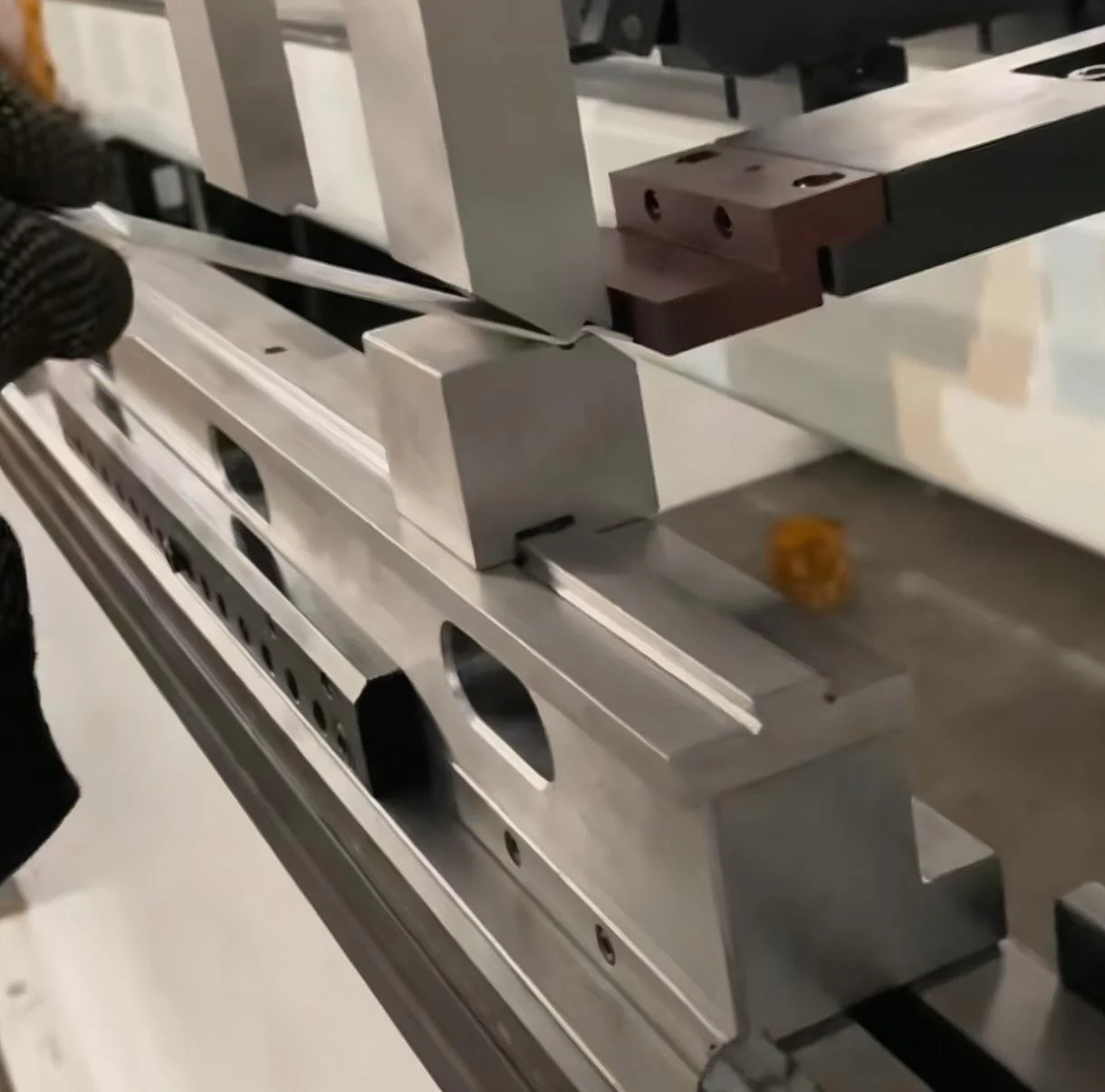
Offset Z bending tooling is a special type of press brake tooling designed to form offset bends, stepped bends, and Z-shaped sheet metal parts.
Compared with standard V dies, offset Z bending tooling can help control two bending features in one compact forming process. It is especially useful when the part design does not allow enough space for separate bending steps.
A properly designed press brake offset tool can improve forming stability, reduce tooling interference, and make the bending result closer to the customer’s drawing.
When Do You Need a Custom Z Bending Die?
You may need a custom Z bending die when your part has one of the following requirements:
The workpiece needs a stepped or Z-shaped profile.
The bend distance is very small.
Standard punches and dies cannot complete the part.
The tool touches or interferes with the workpiece during bending.
The bending angle changes after repeated adjustment.
The product requires better consistency in batch production.
In these cases, using a custom press brake tooling solution is often more effective than repeatedly adjusting the machine.
Why Tooling Design Matters
For offset and Z bending, the tooling is not only a metal block. It directly determines the forming space, bending sequence, workpiece clearance, and final part accuracy.
Before manufacturing an offset Z bending tool, Shengpu Tooling will usually check the customer’s product drawing, material thickness, bending angle, inside radius, forming direction, and press brake clamping system.
This helps us design tooling that is practical for real production, not just good on paper.
Shengpu Tooling’s Solution
Shengpu Tooling manufactures custom press brake tooling for non-standard sheet metal bending applications, including offset Z bending tooling, special-shaped press brake dies, upper punches, lower dies, large radius dies, and other custom forming tools.
If your current tooling cannot complete offset bends or Z-shaped bends smoothly, you can send us your product drawing, sample photo, material thickness, and machine information.
Our team can help evaluate the bending structure and provide a suitable custom tooling solution.
Contact Shengpu Tooling
Need help with offset bending, Z bending, or special-shaped press brake tooling?
Shengpu Tooling can help you review the drawing and customize the right tooling solution.
WhatsApp Business: +86 15155556086
Email: leah@sinobend.com
Website: shengputooling.com
No responses yet