In press brake bending production, many customers face a difficult question:
Can worn tooling still be repaired?
If the bending angle is inaccurate, is the problem caused by the upper punch or the lower die?
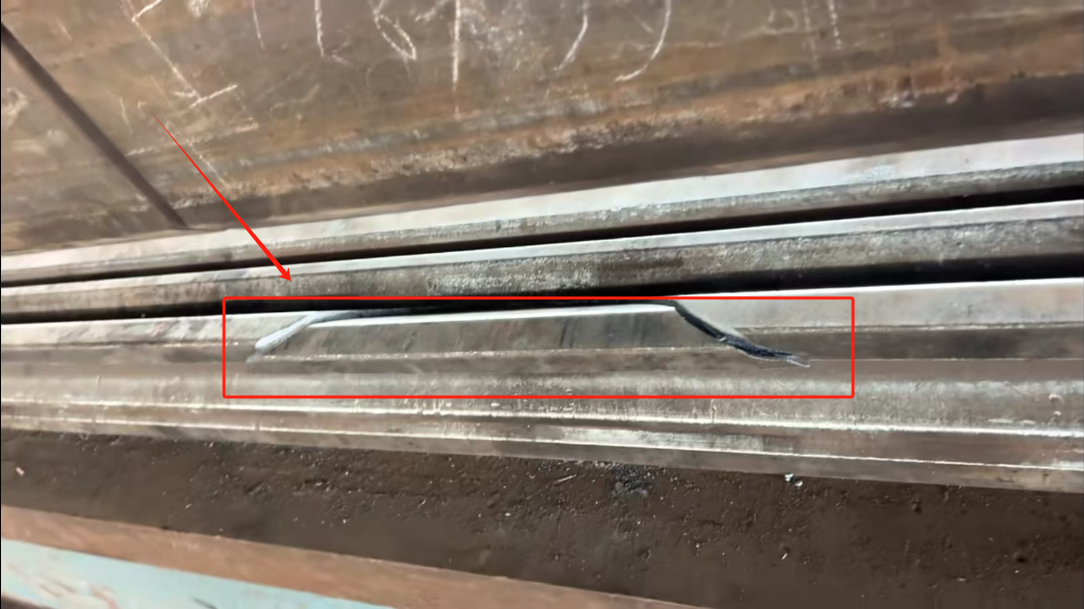
And when press brake tooling cracks appear, can the tool be welded and reused?
These questions may seem like simple maintenance issues, but worn or cracked press brake tooling can directly affect bending accuracy, workpiece surface quality, production safety, and tooling service life.
When Should Press Brake Tooling Be Reground?
If the tooling only has slight wear and no obvious cracks or chipping, regrinding can usually be considered. For example, if the upper punch tip becomes dull, the contact edge has slight wear, the lower die V groove edge has minor burrs, or the workpiece shows slight marks after bending, the tooling can first be checked to see whether precision grinding can restore its condition.
The purpose of grinding is to restore the working surface accuracy, straightness, and contact condition of the tooling, making the bending angle more stable. However, grinding is not unlimited. If too much material is removed, the tooling height, angle, or radius may change, which can affect normal use.
When Should the Upper Punch Be Replaced?
The upper punch mainly bears concentrated pressure, and the condition of the punch tip directly affects the bending angle and the workpiece surface. If the punch tip is seriously worn, if the radius is visibly deformed, or if the upper punch has chipping or cracks, replacement should be considered.
A damaged upper punch can lead to unstable bending angles, repeated machine adjustment, more rejected parts, and wasted production time.
When Should the Lower Die Be Replaced?
The lower die determines sheet metal support and forming space. The condition of the V groove, radius groove, or special-shaped groove is especially important. If the V groove edge is severely worn, the groove opening is deformed, or the sheet metal is not supported stably during bending, it can cause inconsistent angles, heavier workpiece marks, and poor batch production consistency.
If the lower die has obvious cracks, deformation, broken groove edges, or large differences in bending results at different positions, repeated repair is generally not recommended. Replacing the lower die is usually the safer choice.
Can Press Brake Tooling Cracks Be Welded and Reused?
When customers see press brake tooling cracks, one common question is whether welding repair is possible.
For cracks in the middle load-bearing area, welding is not recommended. However, if the crack is not in the load-bearing section, such as at the edge area at both ends of the die, welding repair may be considered only after professional evaluation.
Press brake tooling is usually heat-treated, and the working area has specific hardness requirements. When press brake tooling cracks are welded, the original heat treatment condition may be damaged. The hardness, toughness, and internal stress of the welded area may all change. Even if the surface looks repaired, the actual load-bearing performance may no longer be stable.
Continuing to use welded cracked tooling may cause unstable bending angles, further crack expansion, local tooling breakage, workpiece damage, and potential safety risks during operation.
Therefore, if press brake tooling cracks appear near the load-bearing area, V groove, or key section of a long die, replacement is strongly recommended instead of welding and continued use.
Free Evaluation for Cracked Press Brake Tooling
If you are not sure whether your press brake tooling can be repaired, reground, or must be replaced, you can send us photos of the tooling, cracked area, worn position, bending problem, material thickness, and machine model.
Shengpu Tooling can provide a free evaluation for press brake tooling cracks and help determine whether the tooling can be reused safely or whether replacement is required.
We specialize in press brake upper punches, lower dies, special-shaped tooling, and custom bending solutions, helping customers reduce machine adjustment time, lower rework risks, and improve bending stability.
Contact Shengpu Tooling for Free Evaluation
WhatsApp Business: +86 15155556086
Email: leah@sinobend.com
Website: shengputooling.com
No responses yet