
You lower the punch, and the flange or return flange you formed on the last bend runs straight into the punch body. The straight punch cannot go any further. On irregular-shaped parts with stepped or uneven sections, there may be no place to put a standard punch at all. Force it, and you get a scratch on the part and a different angle on every piece. This is press brake punch collision, and it is one of the most common reasons odd-shaped parts get scrapped.
The cause is usually not the press brake. It is the punch profile. A standard straight punch has a straight body, so it leaves no room for the part of the workpiece that is already formed. This article explains why the punch gets in the way, how a small relief punch (some shops call it a scimitar punch) clears the flange, the four collision problems we see most often and how to solve them, and what to send us if you need a punch designed for your part.
Why the Return Flange Hits the Punch
When you form the second bend, the flange from the first bend rises with the part and swings back toward the punch. If the flange is deep enough, it crosses the punch centreline, and a straight punch body is in its way. Mate describes exactly this in its analysis of deep return flanges: the fix is a punch shape that gives the flange somewhere to go.
The closer the two bends are, and the taller the formed flange, the earlier in the stroke the collision happens. Irregular profiles add a second problem: a raised step or an uneven section can touch the punch before the tip reaches the bend line.
What Is a Small Relief Punch?
A small relief punch has a curved relief cut into the lower part of the body, just above the tip, which gives the punch its scimitar-like shape. The tip comes down on the bend line as usual, and the flange or profile that is already formed moves into the curve instead of hitting the punch body. The punch clears the part without pressing on the formed flange.
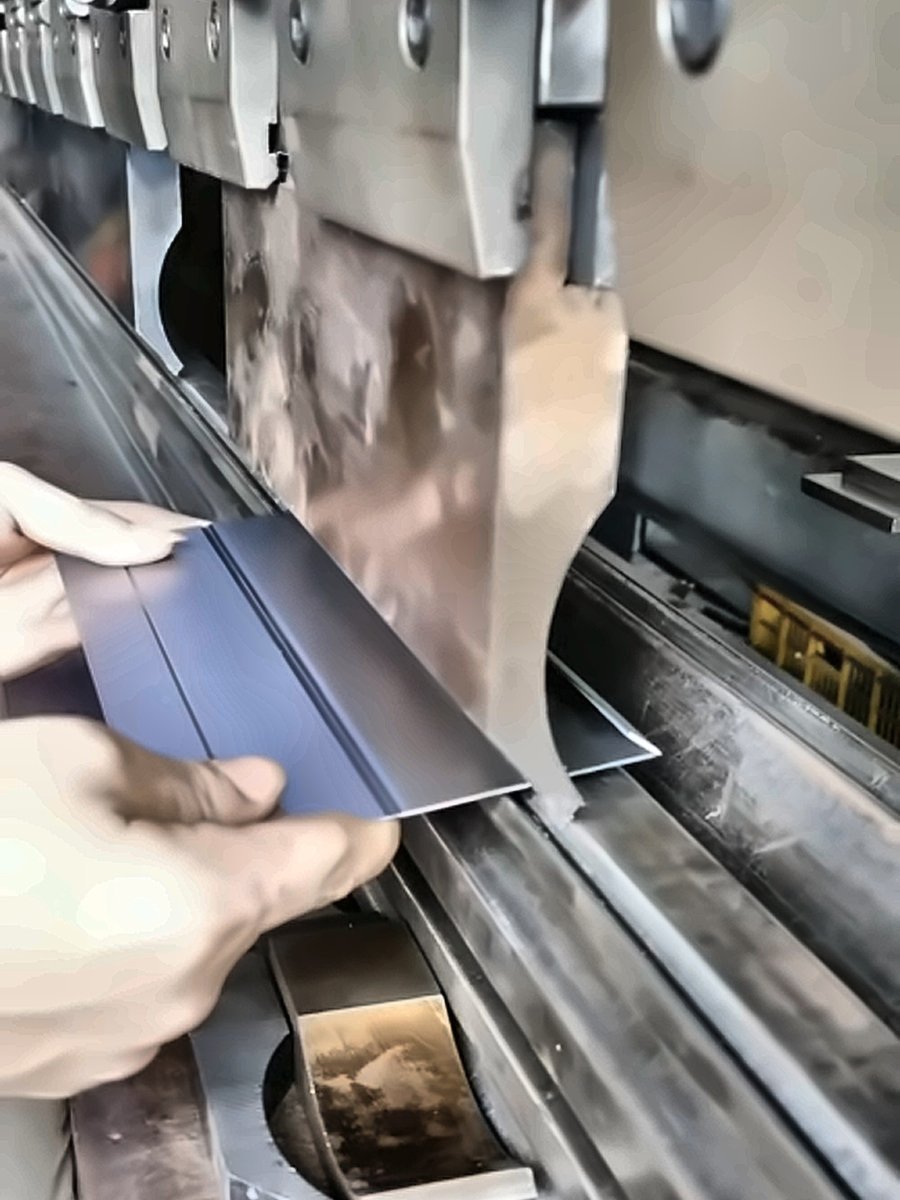
The difference from a large-throat gooseneck punch is the size of the relief. On a small relief punch, the curve is only as big as the part needs. Because less steel is cut away, the body stays stiffer and is less likely to flex when you bend thicker sheet. If your return flange is long or you form deep U shapes, a large-throat gooseneck is the right tool; for short return flanges, trim profiles and shallow channels, a small relief is usually enough. See our small relief gooseneck punch for the full specifications.
We make these punches in our own factory. Each one is heat treated and precision ground, so the bend angle stays accurate and repeatable from part to part.
4 Common Press Brake Punch Collision Problems and How to Solve Them
1. The return flange hits the punch on the second bend
- Symptom: On the second bend, the return flange pushes against the straight punch body and the punch cannot go down.
- Cause: The straight body sits in the path of the return flange. There is no room for the flange to move.
- Fix: The curved relief gives the flange room. It moves into the curve and the bend is formed in one stroke without a collision.
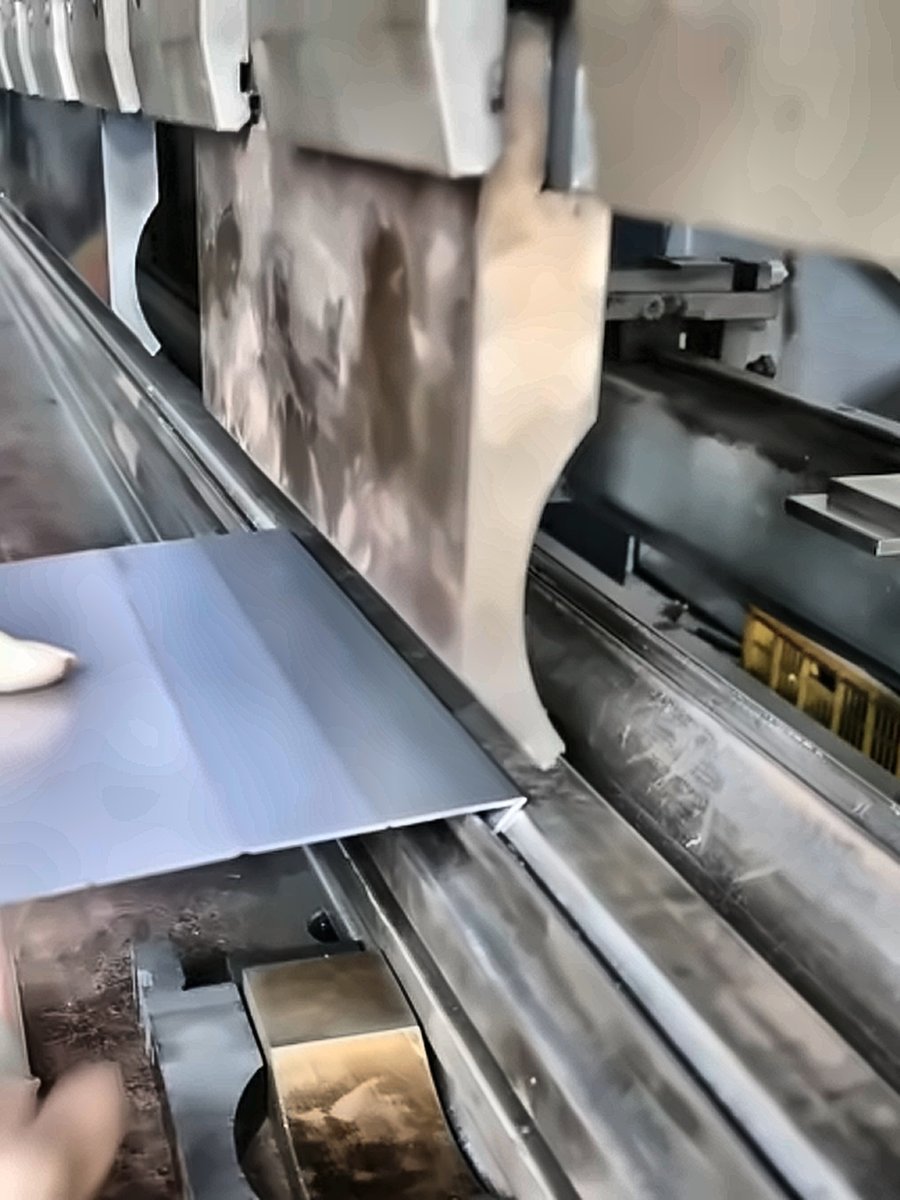
2. Irregular-shaped parts leave no place for the punch
- Symptom: Stepped or uneven sections and special profiles touch the punch as soon as it comes down.
- Cause: Standard tooling is designed for regular bends. It does not take an irregular profile into account.
- Fix: We shape the relief to the measured profile of your part, adding clearance exactly where the part would touch. For profiles that need a fully custom shape, see our special-shaped press brake dies.
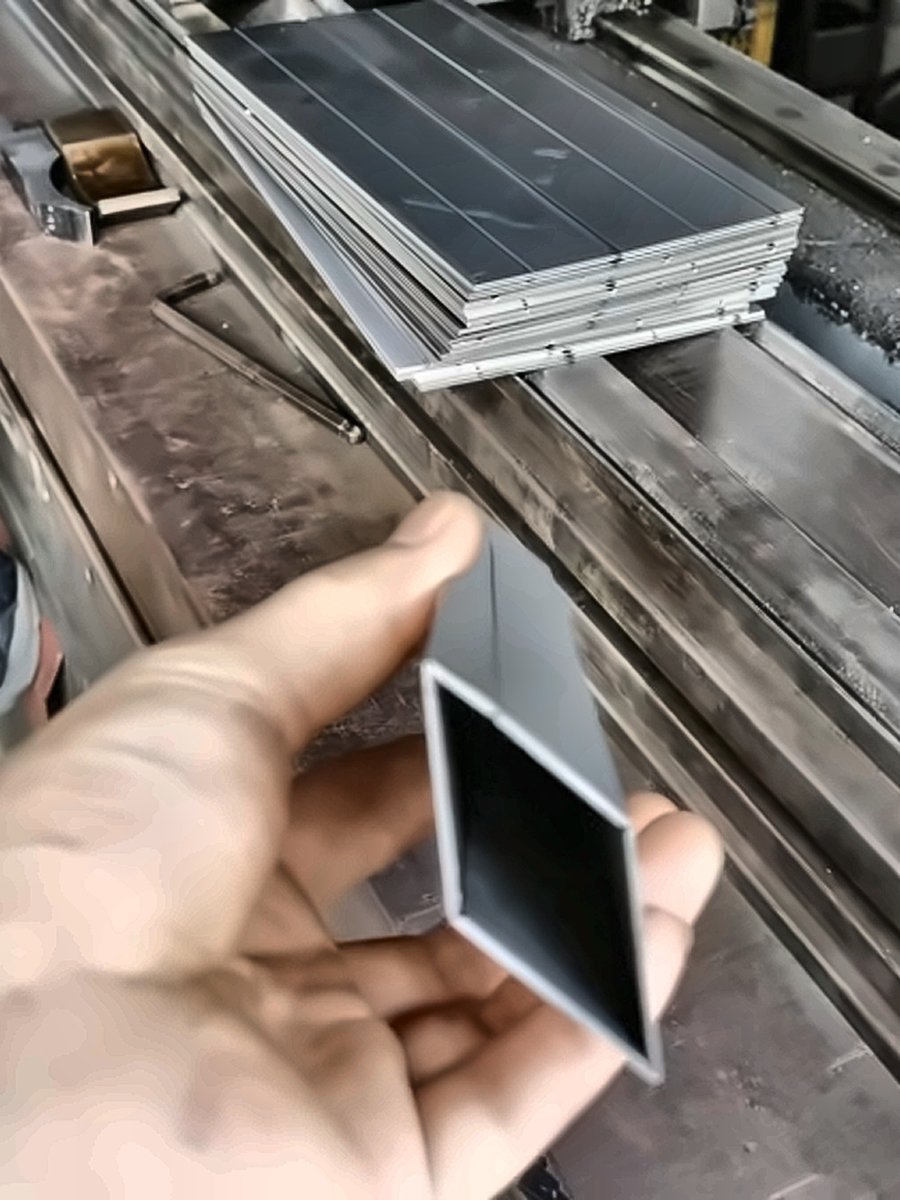
3. A large gooseneck flexes on thicker sheet and the angle drifts
- Symptom: The throat is very large, the body feels soft, and on thicker sheet the angle is not stable.
- Cause: A very large relief removes a lot of steel. The lower part of the body acts like a lever arm and the tool loses stiffness.
- Fix: A small relief, sized just large enough to hold the flange, gives you the clearance you need while keeping the body stiff.
4. The angle changes from part to part
- Symptom: In the same batch the angle is sometimes larger, sometimes smaller, and parts do not fit at assembly.
- Cause: Poor heat treatment or grinding. The tip deforms under load.
- Fix: Hardness HRC 48–52 and precision grinding to ±0.02 mm for centre and parallelism keep the angle repeatable.
Small Relief Punch Specifications
| Item | Specification |
|---|---|
| Tool type | Small relief punch with a curved relief above the tip, shaped to your part profile |
| Tool height | 120 mm (shoulder to tip) |
| Body width | 14 mm; narrower on request to fit your channel |
| Tip angle / radius | 85°; R0.6 mm or R0.8 mm |
| Material | 42CrMo, Cr12MoV or similar tool steel |
| Hardness | HRC 48–52; tip can be laser hardened |
| Precision | Centre, parallelism and perpendicularity ±0.02 mm |
| Segment lengths | 500 / 800 / 835 / 1000 mm; matched sets with joint error ≤ 0.04 mm |
| Fit | Designed for your press brake brand, tonnage and clamping system |
Made in Our Factory, Drawings Confirmed Twice
We make this punch in our own factory, to give you accurate angles and consistent results over a whole batch. Every punch is made to the clamping system and tang dimensions of your press brake, and production starts only after you have confirmed the drawing twice:
- Before you pay a deposit, we send a preliminary drawing for you to confirm.
- After the deposit, we send the production drawing for your final confirmation.
- Machining starts only after you approve the production drawing.
Read more about how we work on custom press brake tooling design.
What to Send for a Free Tooling Design
Any one of these is enough to start:
- a drawing of the part, with the return flange height and the distance between the two bends marked,
- photos of the part or of your current tool, or
- a sample part, if you do not have an accurate drawing.
It also helps to tell us the material and thickness, the bend angle, and your press brake brand and model. If you are not sure which clamping system your machine uses, see how to identify your press brake tooling style.
Common Mistakes
- Checking only whether a punch has a relief, not the flange height. If the relief is too small, the flange still hits.
- Using a large-throat gooseneck for short return flanges. The bigger the relief, the weaker the body. A small relief is enough for short flanges.
- A punch body wider than the channel. If the punch has to go inside a channel profile, measure the channel width first.
- Trying the bend on the machine without checking the sequence. One collision can scrap both the part and the tool. Check the bend sequence against the tool drawing first.
FAQ
How tall does my return flange need to be before I need a relief punch?
There is no single number. It depends on the flange height, the distance between the two bends and the bend sequence. Send us your drawing and we will check it for you.
Is a small relief punch enough? When do I need a large-throat gooseneck?
For short return flanges and shallow channel profiles, a small relief punch is enough. For long return flanges or deep U-shaped parts, you need a large-throat gooseneck or a window punch.
Is a punch with a relief less durable or more likely to break?
The relief has a curved transition and the rest of the body stays straight at 14 mm, so within its rated thickness range it is less likely to break.
Can you shape the relief to my part?
Yes. We size the relief to your flange height and make the tang to fit your press brake clamping system. If you do not have a drawing, you can send us a sample.
Send Us Your Drawing
If your flange keeps hitting the punch on the second bend, send us your part drawing, photos or a sample, and we will design the right tooling for you free of charge.
- WhatsApp: +86 15155556086
- Email: leah@sinobend.com
No responses yet