How to Match a 28° Acute-Angle Press Brake Punch with a 2V Lower Die?
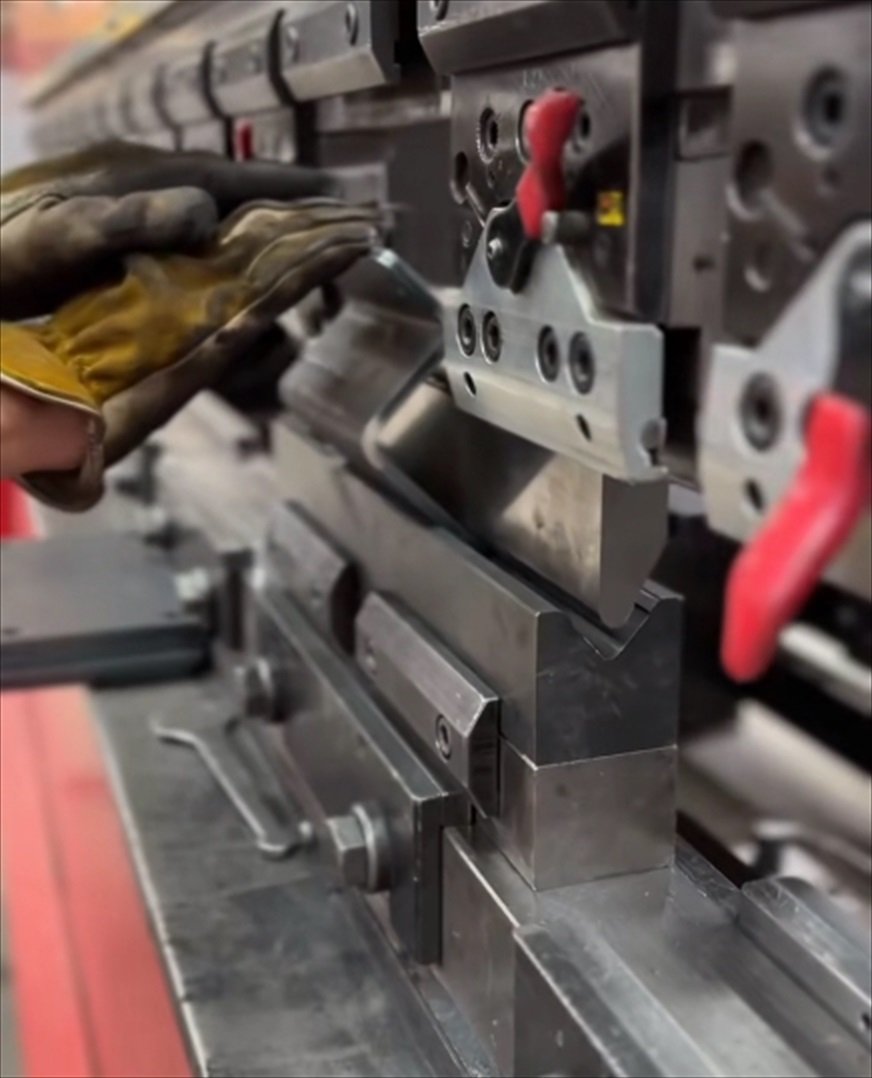
28° Acute-Angle Press Brake Punch and 2V Lower Die
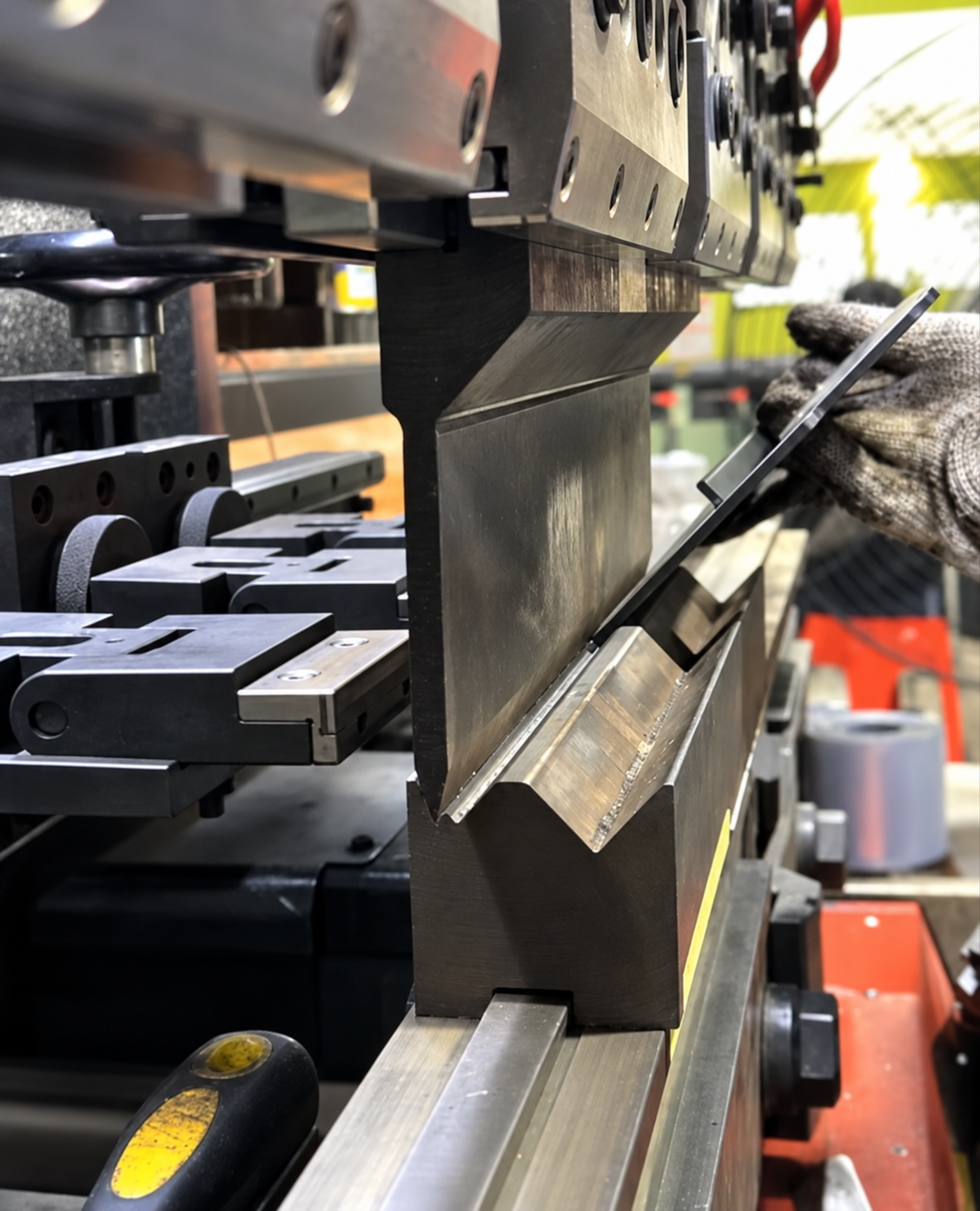
A 28 degree press brake punch and 2V lower die are commonly used for acute-angle bending, pre-hemming and narrow-flange forming in sheet metal fabrication.
This combination can produce consistent results only when the die angle, V-opening, clamping system and load rating are properly matched. Unstable bend angles, incomplete pre-bends and surface marks are often caused by incorrectly matched upper and lower tooling rather than by a problem with the press brake itself.
This guide explains how the tooling combination works, which parameters should be checked before ordering, what types of parts it is suitable for and which selection mistakes should be avoided.
What Is a 28° Acute-Angle Press Brake Punch?
The upper punch is the tool installed on the press brake ram. It presses the sheet into the lower die during bending.
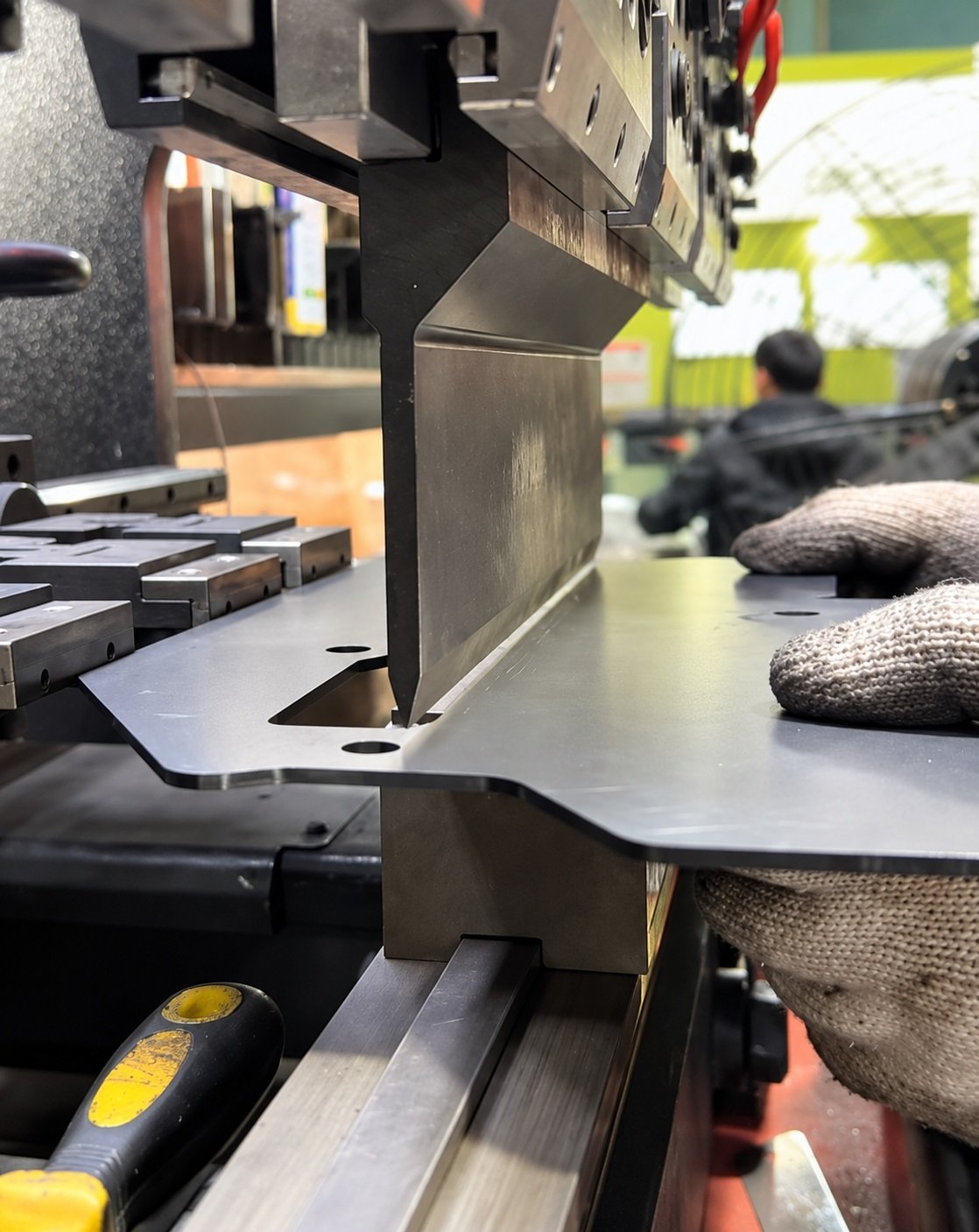
When a bending application requires an acute angle, a narrow acute-angle punch is used. Its pointed tip can form angles significantly below those achievable with standard 88° or 90° punches. It can also enter narrow flanges and tight corners where a standard punch shoulder may cause interference.
A 28° acute-angle punch refers to an upper punch with a 28° included angle at the tip. This angle does not automatically equal the finished bend angle. The final angle also depends on:
- Lower-die V-opening
- Material springback
- Punch penetration depth
- Material strength
- Press brake capacity
- Tooling geometry
Typical Applications
Compared with a standard 88° or 90° punch, a 28° punch is designed for:
- Small-angle and acute-angle bending
- Narrow return flanges and channel parts
- Complex boxes, brackets and electrical enclosures
- Pre-hemming and small-radius forming
- Parts where the standard punch shoulder may cause interference
The available height, throat depth, tip radius, working length and rated load can be customized according to the machine and part drawing. Standard segmented lengths such as 835 mm and 415 mm may also be available, depending on the tooling system.
The main purpose of an acute-angle punch is not to force the material into a sharper angle through excessive pressure. Its main advantage is its geometry: it provides lateral clearance, supports the sheet properly and uses a controlled tip radius to reduce damage to the outer surface.
What Is a 2V Press Brake Lower Die?
The lower die supports the sheet from below while the punch moves downward.
A 2V lower die is a press brake V-die with two V-openings machined into the same die body. The two openings may be designed for different sheet thicknesses or inside radii. The operator can switch between the two V-openings without replacing the entire lower die.
Each V-opening influences:
- Sheet support on both sides of the bend line
- Required bending force
- Approximate inside radius
- Minimum flange length
A narrower V-opening supports the sheet closer to the bend line. A wider V-opening supports the sheet farther from the bend line and generally produces a larger inside radius.
Compared with a single-V die, a 2V die provides greater flexibility for mixed production. One die can cover two common thickness or radius ranges and reduce setup time.
However, a 2V die is not a replacement for a dedicated heavy-duty die when processing very thick plate, high-load applications or special radii.
| Parameter | Typical Specification |
|---|---|
| V-opening combination | V12/V25, V16/V32, V12/V24 and V20/V40, depending on the application |
| Lower-die angle | Commonly 85° or 88°; acute-angle V dies require a separate acute-angle configuration |
| Standard length | 835 mm segmented set; 415 mm and custom lengths available |
| Installation | Lower-die rail or keyway positioning, according to the clamping system |
| Machine compatibility | American, Promecam, European, Wila, Amada and other systems, subject to confirmation |
An 85° or 88° 2V lower die is generally intended for approximately 90° or obtuse-angle bending. When a 28° acute-angle punch is used for acute bending or pre-hemming, an acute-angle 2V lower die, such as a 30° die, is normally required.
How Does a 28° Punch Work with a 2V Lower Die?
The following points should be checked before matching a 28° punch with a 2V lower die.
Lower-Die Angle
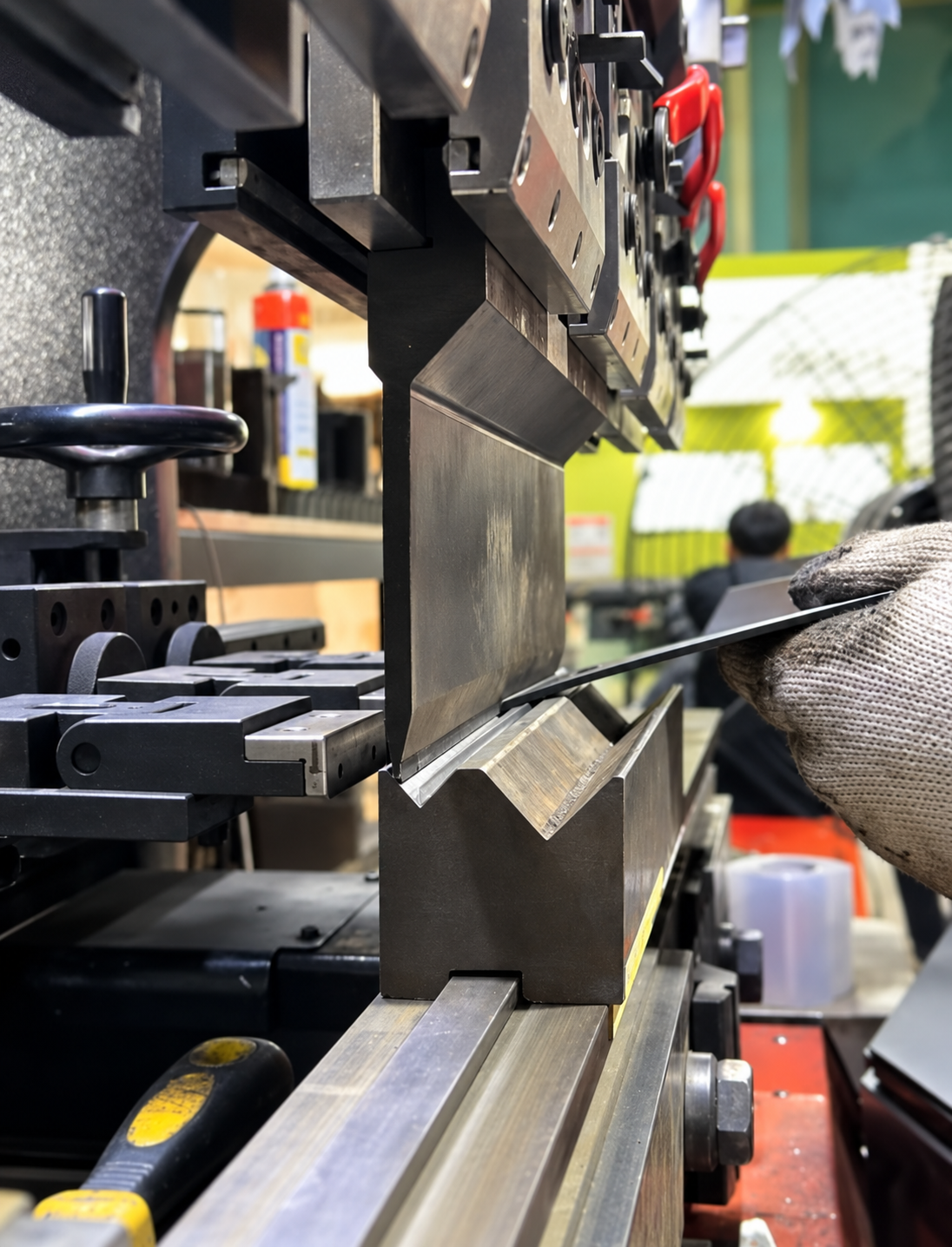
To form an acute angle, the lower die must also provide an acute-angle profile, such as a 30° V-die. In general, the punch angle should not be greater than the working angle of the lower die.
A 28° punch placed in an 88° standard die will generally produce approximately 90° or larger angles, not a true acute-angle bend.
V-Opening and Sheet Thickness
Select the V-opening according to the sheet thickness first, then adjust it according to material strength and the required inside radius.
Center Alignment
The punch tip must be aligned with the centerline of the V-groove. Misalignment may cause:
- Uneven force distribution
- Different angles on each side
- Bend-line deviation
- Excessive load on one die shoulder
Clamping Interface
The upper punch clamping system and lower-die base must match the press brake’s actual clamping system.
Load Rating
The allowable working load must be checked for the upper punch, lower die and press brake. The lowest rated value should control the setup.
Test Bending
Before mass production, perform a test bend using the actual material. Check:
- Bend angle
- Springback
- Inside radius
- Surface marks
- Repeatability
Acute-angle tooling may produce greater springback because of its geometry and forming conditions. Therefore, test bending and first-piece inspection are essential.
The recommended selection sequence is:
- Select the lower-die angle.
- Select the V-opening.
- Confirm the clamping interface.
- Check the load rating.
- Perform a test bend.
Key Parameters to Check Before Tooling Selection
Press brake die selection should consider the material, V-opening, load, clamping interface and tooling hardness. Sheet thickness alone is not enough.
Material and Sheet Thickness
A common starting point is the “eight-times rule”: the V-opening is approximately eight times the sheet thickness.
As a general reference:
- Mild steel: approximately 6–8 times the sheet thickness
- Stainless steel: approximately 8–10 times the sheet thickness
- Aluminum: approximately 8–10 times the sheet thickness, depending on the grade and application
For a 30° V6/V10 acute-angle 2V die, the following values may be used as preliminary estimates:
| V-Opening | Approximate Mild Steel Thickness | Estimated Inside Radius |
|---|---|---|
| V6 | Approximately 0.75 mm | Approximately 0.9–1.0 mm |
| V10 | Approximately 1.25 mm | Approximately 1.5–1.7 mm |
These values are estimates only. The actual working range must be confirmed using the tooling manufacturer’s load data and test-bending results.
V-Opening and Inside Radius
During air bending, the inside radius is not simply pressed into the sheet by the punch tip. It is formed naturally according to the V-opening and material properties.
As a general reference:
| Material | Inside Radius as a Percentage of V-Opening |
|---|---|
| Soft aluminum | Approximately 13%–15% |
| Mild steel | Approximately 15%–17% |
| 304 stainless steel | Approximately 20%–22% |
In general:
- A V-opening that is too small increases the required tonnage and may cause surface damage or cracking.
- A V-opening that is too large increases the inside radius and may increase springback.
A sharper punch tip is not always better. The 28° punch is designed to provide clearance for acute bending, not to force the smallest possible inside radius.
Load and Bending Force
A commonly used preliminary air-bending formula is:
F = 1.42 × Rm × t² ÷ V
Where:
- F = bending force per meter in kN/m
- Rm = material tensile strength in N/mm²
- t = sheet thickness in mm
- V = V-opening in mm
This formula is generally based on standard air-bending conditions. For acute-angle bending, it should be treated as an approximate reference only.
For example, mild steel with a tensile strength of approximately 450 N/mm² and a thickness of 1.25 mm bent over a V10 opening requires approximately 100 kN/m under the reference calculation.
If the sheet thickness doubles, the required force increases approximately four times.
Acute-angle 2V dies may have a lower rated load than standard 85° or 88° dies. Bottom bending and coining require significantly more force than air bending. Therefore, the following must be checked before use:
- Press brake rated tonnage
- Tooling load per meter
- Concentrated-load limitations
- Tooling geometry
- Bending method
Acute-angle 2V tooling should generally be used for air bending unless the manufacturer specifically confirms that it is suitable for bottom bending or coining.
Hardness, Accuracy and Surface Treatment
Tool steel and heat treatment affect wear resistance, dimensional stability and tooling life.
Possible specifications include:
- 42CrMo forged steel or Cr12MoV tool steel
- Standard hardness around HRC 48 ± 2
- Vacuum hardening or laser hardening
- Precision grinding
- Parallelism within approximately ±0.02 mm
- Segmented tooling matching error of approximately 0.04 mm or less
- Black oxide, nitriding, polishing or special surface treatment
Actual hardness and accuracy should be confirmed by the accompanying drawing or inspection report.
Segmented tooling should be installed according to its numbering and alignment marks. Mixing segments from different sets may cause bend-line deviation and inconsistent results.
When Should You Use a 28° Punch and 2V Lower Die?
Small-Angle and Acute-Angle Bending
Part characteristics:
The finished angle is below 90°, or the part requires a sharp pre-bend before flattening or folding.
Why standard tooling may not be suitable:
The shoulder of an 88° or 90° punch may interfere with the narrow bend area or adjacent flange.
What this combination provides:
A narrow 28° punch and a suitable acute-angle 2V lower die provide additional clearance and support for acute bending.
Narrow Return Flanges and Short Bends
Part characteristics:
Short return flanges, narrow channels or parts with limited space beside the punch.
Why standard tooling may not be suitable:
A wide standard punch shoulder may collide with the flange or previously formed sidewall.
What this combination provides:
A narrower punch body and controlled tip radius help the tool enter the opening while maintaining clearance.
Boxes, Brackets and Complex Sheet Metal Parts
Part characteristics:
Electrical enclosures, brackets, frames and multi-bend parts combining acute angles, straight bends and nested geometries.
Why standard tooling may not be suitable:
A standard profile may not provide sufficient clearance for all bend sequences.
What this combination provides:
A matched punch-and-die setup can be selected according to the bending sequence, part geometry, throat depth and working length.
Production with Frequent Tool Changes
Part characteristics:
Mixed production involving several common sheet thicknesses or inside-radius ranges.
Why standard tooling may not be suitable:
A single-V die must be replaced when the required V-opening changes.
What this combination provides:
A 2V die allows the operator to switch between two V-openings without replacing the entire die body.
Mixed Sheet Thicknesses
Part characteristics:
Orders include two adjacent sheet-thickness ranges or materials requiring different support widths.
Why standard tooling may not be suitable:
A single fixed opening may be too narrow for one material and too wide for another.
What this combination provides:
Two V-openings allow the operator to select the appropriate support condition for each material range.
28° Acute-Angle Punch vs. Standard Press Brake Punch
| Comparison | 28° Acute-Angle Punch | 88°/90° Standard Punch |
|---|---|---|
| Typical application | Acute bending and pre-hemming | General 90° and obtuse-angle bending |
| Air-bending range | Approximately 30°–90°, depending on conditions | Approximately 90° and above |
| Required lower die | Acute-angle die, such as 30° | Standard lower die, such as 85°–90° |
| Tool profile | Narrow tip and compact body | Wider body with greater rigidity |
| Load capacity | Varies by model; must be verified | Generally suitable for higher loads |
| Main limitation | Tip wear; generally unsuitable for coining without confirmation | Cannot normally form true acute angles |
The selection principle is simple: use an acute-angle punch when the part requires an angle below 90° or pre-hemming. For standard bending applications, a standard punch is usually more appropriate.
2V Lower Die vs. Single-V Lower Die
| Comparison | 2V Lower Die | Single-V Lower Die |
|---|---|---|
| V-openings | Two V-openings in one die body | One V-opening |
| Changeover | Switch between V-openings | Replace the die to change the opening |
| Suitable thickness | Thin and medium-thickness sheet | Wider range, including thicker material |
| Best for | Mixed production and frequent thickness changes | High-volume production or special thicknesses |
A 2V lower die is suitable when two common V-openings are needed. If the required V-opening is large or the sheet thickness does not change frequently, a single-V lower die may be more suitable.
Common Tooling and Clamping Mistakes
- Selecting tooling based only on the punch angle without checking the lower-die opening.
- Ignoring material strength and springback.
- Failing to confirm the upper and lower clamping interfaces.
- Choosing a V-opening that is too narrow.
- Ignoring bending length and load per meter.
- Failing to align the punch and lower-die centerlines.
- Using unverified angle, radius or load data.
- Skipping test bending and first-piece inspection.
Eight-Step Press Brake Tooling Selection Checklist
- Confirm the material grade, tensile strength and sheet thickness.
- Define the target bend angle and whether pre-hemming is required.
- Confirm the required inside radius.
- Select a V-opening based on approximately 6–10 times the sheet thickness, then adjust it according to the material.
- Select the lower-die angle and ensure that the punch angle is compatible.
- Confirm the upper and lower clamping systems.
- Calculate the bending force and use the lowest rated value among the punch, lower die and press brake.
- Perform a test bend and inspect the angle, springback, inside radius, surface marks and repeatability.
Frequently Asked Questions
What Is a 28° Acute-Angle Press Brake Punch Used For?
It is a narrow, pointed upper tool used for acute-angle bending, narrow return flanges, pre-hemming and tight corners where a standard punch shoulder may cause interference.
The 28° specification describes the punch tip angle. It does not automatically represent the finished bend angle.
What Is a 2V Lower Die Used For?
A 2V lower die has two V-openings in one die body. It allows the operator to cover two common material thickness or inside-radius ranges without replacing the entire lower die.
Can a 28° Punch Be Used with Any V-Die?
No. The punch and lower die must match in terms of die angle, V-opening, center alignment, clamping interface, working length and load rating.
How Do I Choose the Correct V-Opening?
Start with the material type, sheet thickness and target inside radius. For air bending, mild steel often uses approximately 6–8 times the sheet thickness, while stainless steel and aluminum may require approximately 8–10 times the thickness.
The final selection must be verified with bending-force calculations and test bending.
Which Press Brake Systems Are Compatible with This Tooling?
The tooling can be configured for American, Promecam, European, Wila, Amada and other clamping systems.
Final compatibility must be confirmed according to the machine brand, model, tooling height, shut height and interface drawing.
What Information Is Needed for a Tooling Recommendation?
Please provide:
- Material type and thickness
- Target bend angle
- Required inside radius
- Bending length
- Press brake brand and model
- Upper and lower tooling interfaces
- Production quantity
- Part drawing or CAD file
Can the Punch and Lower Die Be Customized?
Yes. We provide custom press brake tooling, including customized throat depth, tip radius, angle, working length, segmented sets and special profiles.
Need a 28° Acute Punch and 2V Die for Your Press Brake?
Send us your press brake model, material and thickness, target bend angle and part drawing. Our engineers will check the die angle, V-opening and tonnage, then recommend a matching 28° acute punch and 2V die, or custom press brake tooling if standard sizes don’t fit.
Prefer email? leah@sinobend.com

Flange Hitting the Punch? How to Stop Press Brake Punch Collision on Odd-Shaped Parts
Return flange or odd profile hitting the punch? See why press brake punch collision happens and how a small[…]

Press Brake Tooling Styles: American vs European vs New Standard
Press brake tooling styles compared: American, European and Wila/Trumpf. Learn how to measure punch tangs and check die fit[…]
Press Brake Punch Guide: How to Choose a Shortened Straight Punch
Not Sure Which Press Brake Punch to Choose? Press Brake Punch Guide: How to Choose a Shortened Straight Punch[…]
No responses yet